2612 5555
Rm 11, 18/F, Wing Fung Industrial Building, Tsuen Wan, NT
Get a School Quote

Primary 3D Printing Course


The following two courses can be flexibly arranged to school needs — project-oriented with progressive modelling, showcases and portfolio building, balancing design thinking and hands-on skills.

Quick course picker
2 courses

3D Modelling & Design Course

3D Modelling Beginner Tinkercad
View course

3D 3D Printing Creative Course

Tinkercad/Blender Design Thinking 3D 3D Printing Workshop
View course
3D Modelling Fundamentals Spatial Geometry Creative expression
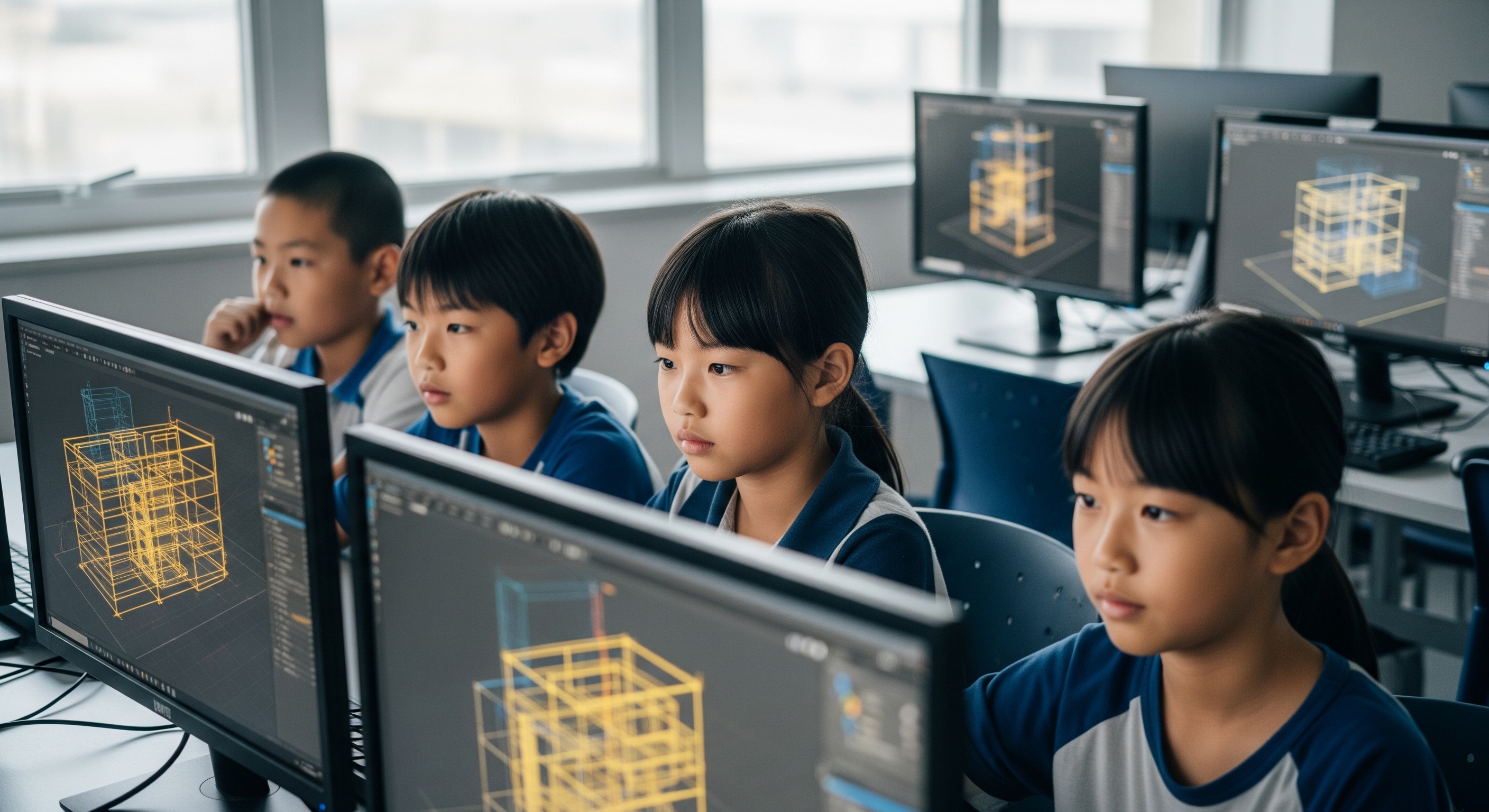
Tinkercad Modelling class: students create forms with geometric shapes
(Image generated by generative AI)

3D Modelling Design Course | Course Overview

This course guides students into the world of 3D design. Tinkercad — a simple, fun, powerful online 3D modelling tool — is like digital building blocks, letting children turn ideas into 3D cartoon characters, fun toys and fantasy scenes! Through gamified teaching, hands-on practice and project creation, children learn the secrets of 3D design in a happy atmosphere and grow into young inventors and future designers!

What students will learn and gain

  • Learn 3D modelling fundamentals
  • Understand Spatial Geometry Concepts
  • Apply Design Thinking Process
  • Familiarise with the 3D design environment

Course highlights

This project-based course progresses from toys and buildings to mechanical parts, helping students build modelling confidence quickly in Tinkercad's accessible visual interface. Design thinking is integrated throughout — from ideation through prototyping and iteration — strengthening problem-solving and expression. Works can be exported for 3D printing or showcased in VR/AR and school exhibitions. Assessment combines worksheets and portfolios to show technical and design growth, with cross-curricular links to visual arts and general studies.

Competitions & showcase opportunities

  • In-school STEM carnival showcase
  • School STEM Week themed exhibition
  • School Open Day

Future-ready advantages

Learning 3D modelling helps students become young inventors, turning ideas in their minds into unique 3D works, while greatly improving creativity and problem-solving. When designing in 3D space, students think about shape, size and placement — training spatial awareness and systematic thinking. The course combines art, mathematics and technology for cross-disciplinary STEAM foundations. Seeing their 3D work appear on screen — or printed on a 3D printer — boosts confidence and the sense that 'I can do it!'
Lessons focus on thematic activities and games so students learn Tinkercad's interface, view navigation, basic modelling and geometry in a cheerful atmosphere, breaking complex objects into simple shapes step by step. Students learn to analyse and solve design challenges and showcase their 3D work, improving creative expression. These experiences build practical skills plus independent thinking, patience and teamwork — a solid foundation for future innovation and technology pathways.
Syllabus (example 8-unit programme)

  • Unit 1: 3D design fundamentals
  • Unit 2: Introduction to Tinkercad
  • Unit 3: Geometric modelling techniques
  • Unit 4: Creative shape design
  • Unit 5: Mechanical part design
  • Unit 6: Architectural model making
  • Unit 7: Character model creation
  • Unit 8: Preparing for 3D printing
(sessions and topics can be adjusted to school needs)
Productisation Mindset 3D Printing Craft Prototype Development
3D Printing class: students complete physical prototypes and post-processing
(Image generated by generative AI)

3D 3D Printing Creative Course | Course Overview

This course takes children into the limitless world of 3D design. Using simple, fun 3D modelling software (e.g. Blender), students create models and place them on metaverse platforms (e.g. Spatial) to experience touring their own 3D scenes in virtual worlds. The course develops spatial awareness, creative problem-solving, teamwork and hands-on skills, laying a solid foundation for STEM learning and future development.

What students will learn and gain

  • Introduction to Product Design
  • Master advanced modelling and topology optimisation
  • Learn professional 3D printing workflows
  • Complete a workable product prototype

Course highlights

Emphasising integration of virtual and physical worlds, this course takes students through the full product development workflow from digital modelling to physical printing. Advanced modelling and topology optimisation in Blender develop engineering-oriented thinking on tolerances, structural strength and manufacturability. Functional prototypes and creative product tasks build design and implementation skills in real contexts; work can be showcased at maker fairs or school innovation events, with 3D printing certificates provided.

Competitions & showcase opportunities

  • In-school STEM carnival showcase
  • School STEM Week themed exhibition
  • School Open Day

Future-ready advantages

Upon completion, students master core 3D modelling and VR skills and unlock cross-disciplinary innovation through hands-on practice. Turning real environments into digital 3D models strengthens understanding of spatial layout and structure, improving spatial cognition, geometric logic and the ability to turn imagination into 3D work. Designing and building virtual scenes requires thinking about scale, proportion and materials and solving design challenges — developing creativity and problem-solving.

Syllabus (example 8-unit programme)

  • Unit 1: Principles of 3D printing technology
  • Unit 2: Blender modelling basics
  • Unit 3: Advanced modelling techniques
  • Unit 4: Print optimisation design
  • Unit 5: Creative product development
  • Unit 6: Metaverse showcase application
  • Unit 7: Exploring commercial applications
  • Unit 8: Personal design project
(sessions and topics can be adjusted to school needs)

More primary recommendations

The following courses are designed for primary students — safe, low-burden, high-participation interaction, suitable for open days, STEM Week or parent-child showcases.

Course thumbnail

VEX 123 Coding Mindset

Systematically develop computational thinking aligned with local curriculum guidelines — mastering sequences, loops and conditionals through practice; work showcase-ready for STEM Week and open days.

  • Learning focus: sequences, loops, conditionals; algorithm design, debugging and optimisation; logical reasoning
  • Course highlights: project-based tasks, physical coding cards to lower barriers, competition elements integrated
Screen-free coding Computational Thinking Sequence / Loop / Condition Physical Coding Cards
Course thumbnail

VEX GO Integrated Robotics and Coding Course

VEX GO deepens mechanical structure and block programming — students build functional robots and develop programs with VEXcode GO through the full engineering design process; a key bridge to VEX IQ.

  • Learning focus: mechanical principles and structural design, block programming, sensor data application, engineering design thinking, project management
  • Course highlights: hands-on practice with theory, real-world projects, group collaboration and showcase
  • Competitions/Showcases: VEX GO local tournaments, Innovation & Technology Carnival, STEM Education Expo, inter-school exchange competitions
VEXcode GO Mechanical Structures Engineering Design Team Collaboration
Course thumbnail

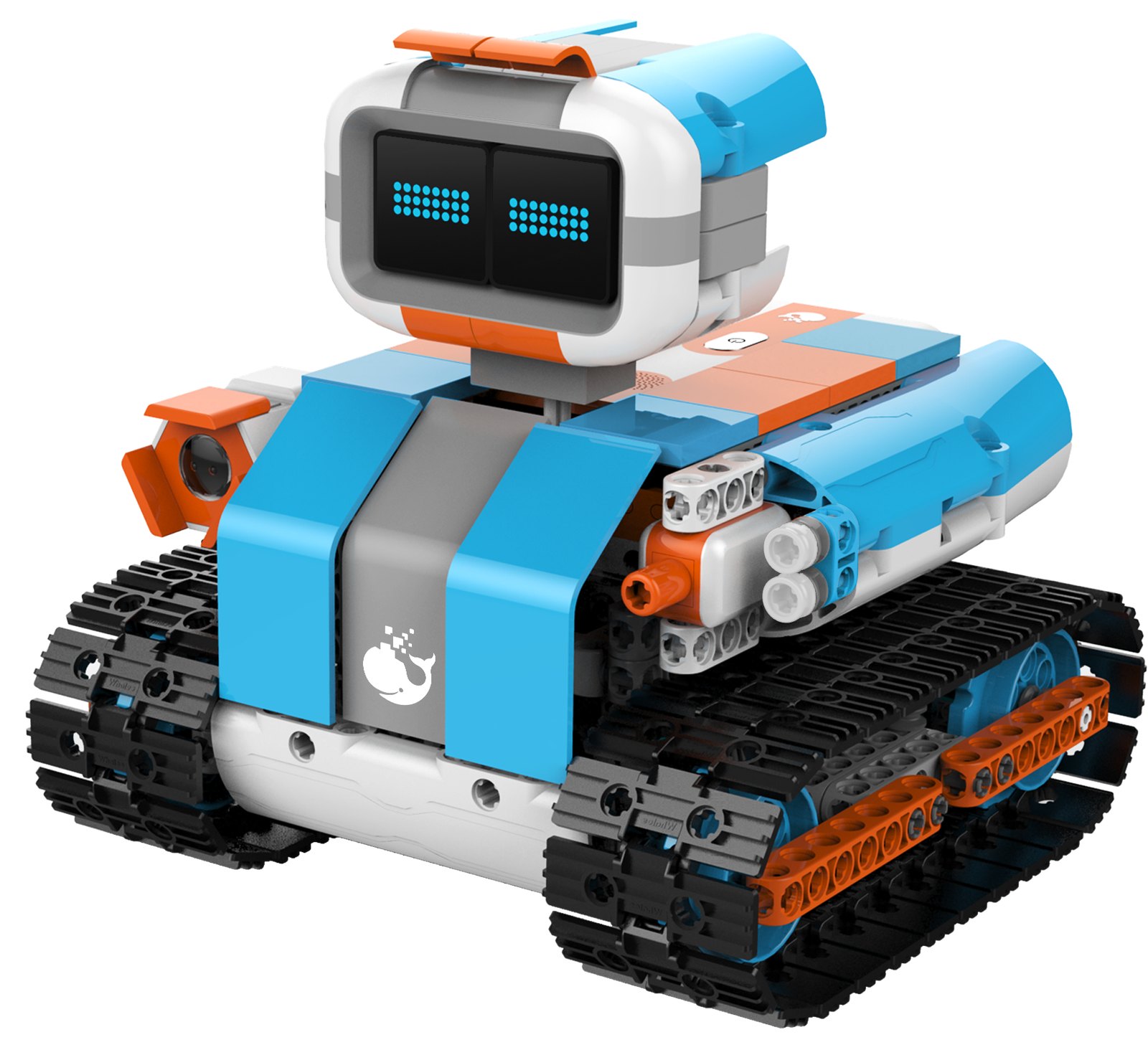
WhalesBot AI 1S AI Coding Course

Using AI Module 1S, students explore robot building, advanced programming and basic AI applications in depth.

  • Learning focus: sensor applications and data processing, foundational AI concepts, robot building and structural design
  • Course highlights: gradual progression from visual to text-based programming, introductory robot structure concepts, programming fundamentals
  • Competitions/Showcases: Hong Kong WhalesBot Regional, Shanghai WhalesBot Global Finals, STEM Week flagship projects
Scratch/Python/C AI Beginner Sensor Data International Exchange

Ready to bring innovative STEAM learning to your students?

Contact us for a STEAM programme proposal and quote tailored to your school

中文EN