
VEX IQ Advanced Competition Training
Professional robotics competition training aligned with international standards, developing well-rounded competition skills.

The following courses for secondary students — from basics to advanced — develop robot design, AI application and programming skills for future technology talent.

Centred on the Micro:bit microcontroller with the Huskylens AI vision sensor giving robots 'vision', combined with the KittenBot robot kit for mechanical assembly and control, students learn image recognition, object tracking and face recognition through hands-on practice, applying these to autonomous robot navigation, interactive tasks and IoT smart environment construction.
Content covers theory and practice, developing cross-disciplinary integration, logical thinking and systematic problem-solving. Instructors guide group thematic studies and creative projects, encouraging exploration, innovation and end-of-course individual or team showcases.
Students work directly with AI vision sensors, experiencing face recognition, object tracking, colour identification and line tracking tasks.
Content integrates electronics (Micro:bit), mechanical structure design (KittenBot), programming (MakeCode/Python) and AI (Huskylens), helping students combine knowledge across fields and improve cross-disciplinary integration and problem-solving. They learn to turn sensor data into program logic and design and optimise robot behaviour, strengthening logical and critical analysis.
Students also assemble robots, connect electronics, write and debug code, turning abstract concepts into concrete smart applications. This sparks creativity and hands-on skills and strengthens university applications (e.g. computer science, AI, robotics, electronic engineering), laying foundations for technology, innovation and smart industries.
Content covers AI, IoT, sensor technology, microcontroller development, cloud computing and data analysis, with real-time case studies on AIoT in smart homes, smart cities, healthcare and environmental monitoring.
Through project-based learning and hands-on practice, students take part in designing and developing intelligent systems. The course teaches integration of sensors, microcontrollers (e.g. Arduino, Raspberry Pi), communication modules, cloud platforms and AI algorithms so students can independently design, programme and deploy smart devices with sensing, thinking and connectivity. Students also learn data collection, preprocessing, analysis and visualisation, mastering the AI-driven IoT solution development workflow.
The course explores core concepts, technical architecture and diverse applications of AIoT (Artificial Intelligence of Things) in modern society.
Students master core technologies needed for future society and the workplace, and develop advanced computational thinking, system integration and innovative problem-solving through projects. Emphasising hands-on innovation and engineering design, students design and build smart devices — from sensor data collection and programming to cloud analysis and AI — experiencing the full intelligent system development workflow.
The following courses for secondary students cover VEX robot competitions, professional robot development and AI robotics introduction — developing technical ability comprehensively.
Professional robotics competition training aligned with international standards, developing well-rounded competition skills.

Near-university-level robotics learning experience using industrial-grade development tools. World championship winners often receive full scholarships.
Near-university-level robotics learning using industrial-grade development tools to build professional R&D skills.
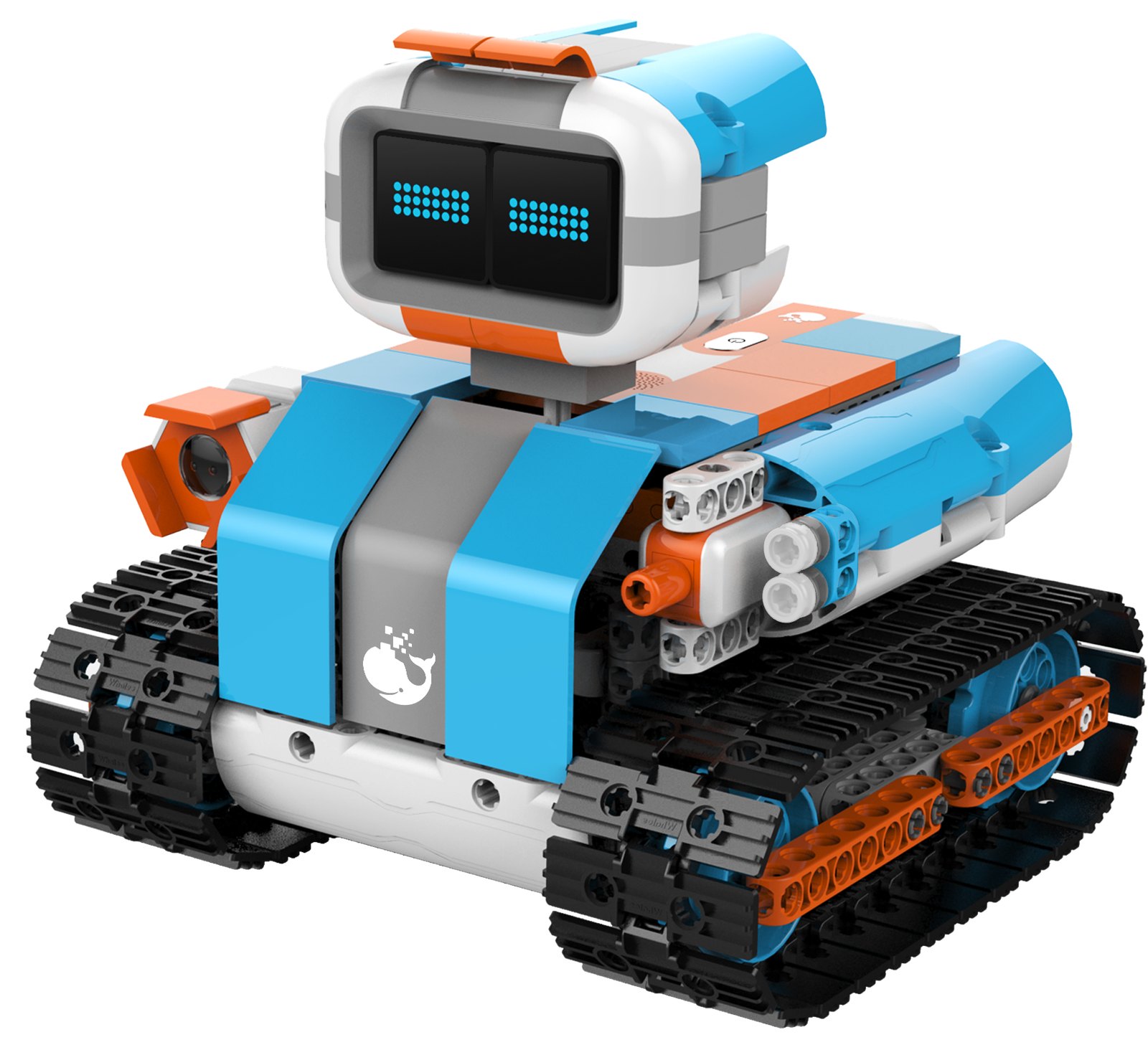
Combining WhalesBot AI Module 1S to build programming foundations — Scratch, Python, C — completing smart projects.
Contact us for a STEAM programme proposal and quote tailored to your school