Generative AI App Development Course
Gain in-depth understanding of generative AI technologies such as ChatGPT and Midjourney. Learn advanced prompt engineering techniques to complete more complex creative, analytical and problem-solving tasks.

The following courses for secondary students — from basics to advanced — develop app development and innovation skills for future mobile internet talent.

Centred on 'project-based learning + advanced techniques', this course combines game development, sensors, multimedia, data storage, external data and introductory AI. Content draws on intermediate and advanced highlights from online courses (multi-screen layout, UX, external data sources, AI concepts) and classic exercises from supporting materials (Space Invaders, canvas and ball sprites, speech recognition and TTS, TinyDB, BMI/Calculator, camera and accelerometer), guiding students to complete an installable, showcase-ready secondary-level project.
Complete development workflow from ideation to publishing. Learn app monetisation, user analytics, version management and more. Includes AI and IoT integration.
Beyond block coding, the course applies programming to real projects — combining game design, multimedia, sensors, data storage, external data and AI so students solve real-life problems and turn creativity into usable work.
Through project development and group collaboration, students experience the full workflow from ideation, planning, design, coding, testing to release — learning to analyse problems, break down tasks, manage projects, express ideas and collaborate. Content covers multi-screen design, good UX, data and sensor applications, voice interaction and introductory AI concepts — essential foundations for future IT, engineering and design. Upon completion, students can independently develop creative, substantial mobile apps and build portfolios that strengthen competitiveness in school showcases, public competitions and admission interviews.
The following courses for secondary students cover AI applications, language processing, visual recognition and 3D printing — developing technical ability comprehensively.
Gain in-depth understanding of generative AI technologies such as ChatGPT and Midjourney. Learn advanced prompt engineering techniques to complete more complex creative, analytical and problem-solving tasks.
Explore large language models and natural language processing. Develop language AI applications and master core technologies of the future.
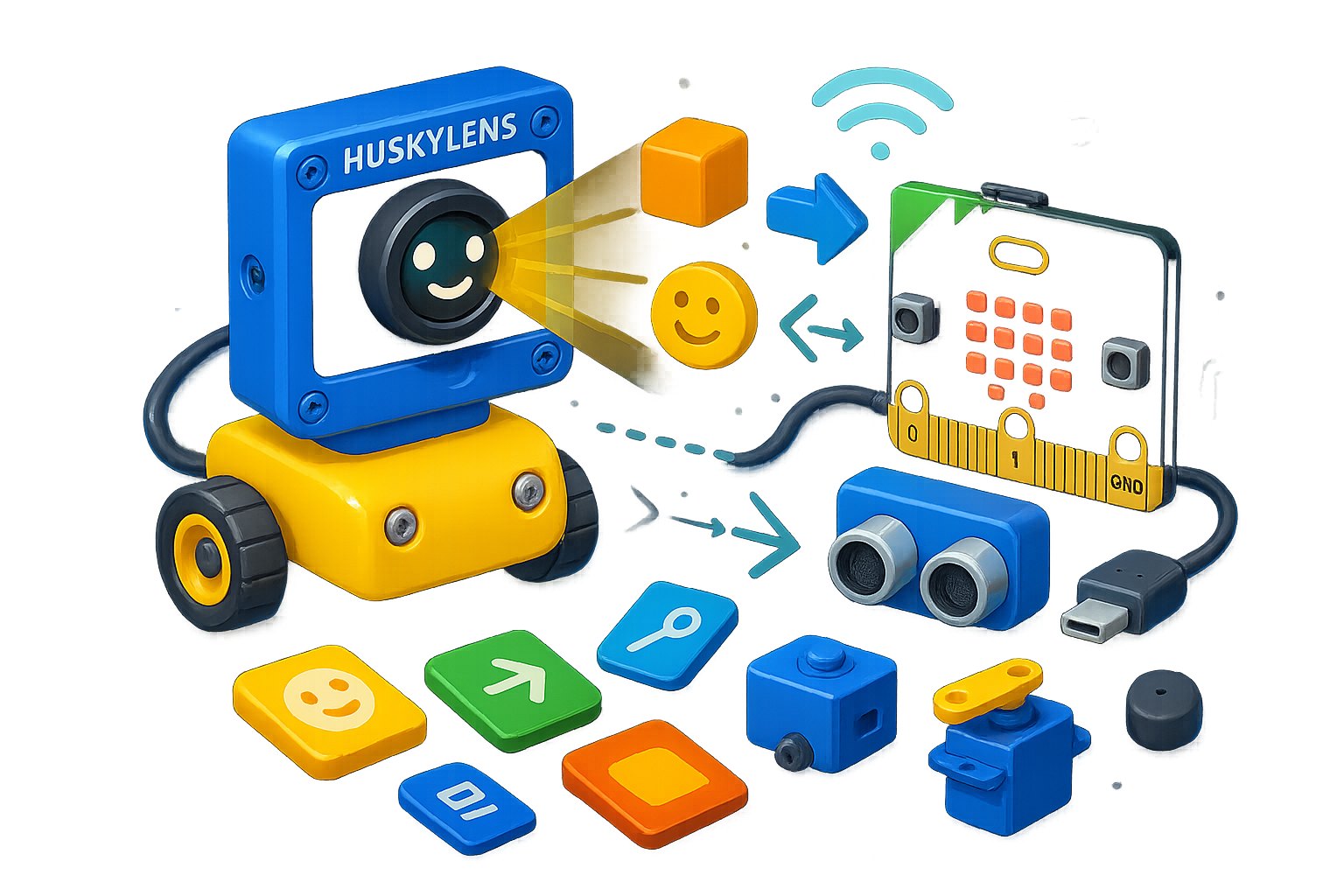
Combining Micro:bit and HuskyLens for AI vision learning, students practise image recognition, object tracking and face recognition and apply these to autonomous robot navigation, interactive tasks and IoT smart environment construction.
Complete 3D printing learning from design to manufacturing. Develop innovative products and enter invention fairs.
Contact us for a STEAM programme proposal and quote tailored to your school